Commercial Moves in South Kensington
Moving a business is never just about boxes and vans. It is about keeping staff productive, protecting equipment, reducing downtime, and making sure the move fits around the reality of busy streets, shared buildings, and tight access. Commercial Moves in South Kensington need careful planning because this is an area with a unique mix of elegant offices, professional practices, hospitality spaces, educational settings, showrooms, and high-value premises. Whether you are relocating a small office near the museums, moving a consultancy from a period terrace, or transferring a retail or studio space in a busy commercial building, the right moving team can make a significant difference.
South Kensington has a distinctive character that affects how business moves are carried out. Streets can be narrow, parking can be limited, buildings can have stair access or loading restrictions, and many properties sit inside busy mixed-use blocks where residential and commercial needs have to work together. That means a move here needs more than a standard van and a few strong arms. It needs planning, timing, communication, and a practical understanding of local conditions. If you are arranging a business relocation in the area, you want a service that works smoothly, respects the building, and helps your operation get back to normal as quickly as possible.
From small internal office changes to larger full-premises relocations, the best approach is one that is organised from the start. A local team can help you prepare, pack, label, move, and set up your equipment in a way that suits your schedule. If you are looking for commercial removals in South Kensington, or support with a one-off office transfer, storage move, or furniture relocation, this page explains what to expect, what is included, and how to plan a move with less stress. When business continuity matters, local knowledge matters too.
Why Commercial Moves in South Kensington Need a Local Approach

South Kensington is not a straightforward suburb with easy loading bays and wide roads everywhere. It is a busy, highly connected part of London, with a blend of historic buildings, modern office suites, cultural institutions, and busy commercial premises. A move here often has to work around road restrictions, shared entrances, lift bookings, landlord rules, visitor access, and the general pace of the area. A local moving company understands these constraints and can plan around them rather than discovering them on moving day.
For commercial customers, this local knowledge can be just as important as manpower. An office move may need an early start to avoid peak traffic. A practice or consultancy might need discrete handling of confidential files and specialist furniture. A shop or showroom may need careful lifting of display units and stock. A hospitality business may require after-hours work to avoid interrupting service. In each case, a team familiar with South Kensington commercial relocations can reduce delays and help the move run in a more controlled way.
The area also includes a wide range of property types, from upper-floor offices and converted townhouses to mixed-use developments and premises with awkward access. That variety makes a tailored service essential. When the movers know the local environment, they can assess parking, loading, stair carries, and timing before the job begins. That saves time, lowers risk, and reduces disruption for your team and your customers.
What makes the area different?
Business premises in South Kensington often sit close to residential buildings, meaning noise, access, and timing need to be managed carefully. Some locations have concierge desks or building managers who need advance notice. Others require protective coverings for floors, lifts, and door frames. A commercial move that respects these details is not only smoother but also more professional.
Who Our Commercial Moving Service Is For

Commercial moves cover far more than traditional office relocations. In South Kensington, local businesses come in many forms, and each has its own challenges. A good moving service should be flexible enough to support different business types, including small teams and larger operations. Whether you are moving one room or an entire floor, you need a clear plan and a team that can adapt to the pace of your business.
Typical customers include professional services, independent retailers, creative studios, medical or wellness practices, educational organisations, hospitality businesses, and shared workspaces. Some clients need full relocation support, while others only need furniture moved within the same building or a few items transferred to another location nearby. Commercial moving in South Kensington should be built around your exact needs, not a one-size-fits-all approach.
If you are in a business property close to Kensington, Knightsbridge, Chelsea, or the surrounding central London districts, local moving support can also be useful for short-notice transfers, phased moves, and multi-site coordination. Many businesses do not move all at once. They need part of the team to remain operational while the rest of the office is shifted in stages. The right movers can help keep that process organised and manageable.
Examples of commercial moves we can help with
- Office relocations
- Professional practice moves
- Retail and showroom transfers
- Furniture-only commercial removals
- Internal office reconfigurations
- Storage and archive transfers
- Equipment and IT relocation support
- Multi-floor or phased business moves
Whatever your business type, the aim is the same: keep disruption low and get the move done efficiently. A locally aware team will understand how to work around your operating hours, building access, and practical constraints.
What Is Included in a Commercial Move

A well-run business move is more than lifting desks and carrying chairs. The service should start with planning and continue through packing, loading, transport, delivery, and placement at the new site. For commercial customers, the quality of the move is often judged by how quickly staff can settle back into work. That is why it helps to know exactly what is included before the move begins.
Depending on the size and nature of your move, a commercial removals service in South Kensington may include packing support, dismantling and reassembly of office furniture, careful handling of files and equipment, and protective materials for floors and furniture. Some companies may also offer crate supply, labelled containers, and timed collection to fit with your building access requirements. If your business has specialist items, such as filing systems, display fixtures, or sensitive equipment, these can be addressed during the planning stage.
Another important part of the service is coordination. Commercial moves are usually smoother when there is a clear point of responsibility and a set schedule. The moving team should know what is being moved first, what needs special care, and what can be handled in stages. Clear labelling, room-by-room placement, and thoughtful sequencing all help minimise confusion on arrival.
Common inclusions for business relocations
- Pre-move discussion and planning
- Loading and unloading by trained movers
- Furniture dismantling and reassembly where needed
- Protection for items and building surfaces
- Transport between business premises
- Placement of items in the correct rooms or zones
- Help with office layout setup after delivery
- Flexible scheduling for out-of-hours or phased moves
Some moves also involve temporary storage between locations. If your new premises are not ready on the same day, or if you are moving in stages, storage may be a practical solution. This can be especially useful for businesses based in South Kensington where leases, fit-outs, or refurbishments often involve timing gaps.
How a Commercial Move Usually Works
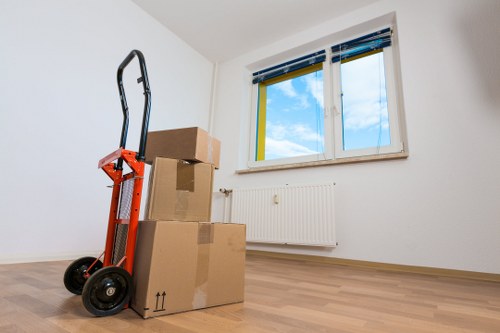
The process should be straightforward, but it should never be rushed. A sensible move starts with a discussion about your business, your deadlines, and the contents of the property. The more information you can share in advance, the easier it is to plan the right number of movers, vehicles, and time slots. For local businesses in South Kensington, this stage is especially useful because access and timing can make a big difference to the day itself.
After the initial planning, the team will often help you identify what needs to be moved, what can be packed separately, and what should be handled with extra care. If your business uses computers, monitors, printers, specialist tools, or display items, those may need to be prepared differently from standard office furniture. Some businesses also choose to create a moving checklist for each department so that nothing is overlooked.
On the moving day, the team arrives at the agreed time, checks access, and begins loading in a planned order. Items are usually placed according to the layout of the new premises, which helps your staff resume work faster. Good movers will also keep communication open throughout the day so that any unexpected issues can be handled quickly and calmly. That practical, steady approach is often what customers value most.
Typical stages of the move
- Initial enquiry and move assessment
- Planning around building access and timing
- Packing, labelling, and preparation
- Loading, transport, and delivery
- Placement and reassembly at the new site
- Final checks to make sure everything is in the right place
For many businesses, the real benefit of a professional move is not just physical labour but the sense of order it brings. Knowing that the process is organised makes it easier for managers and staff to focus on the work that keeps the business moving.
Preparation Checklist for South Kensington Businesses

Good preparation can make a commercial move much easier, especially in an area where access, timing, and coordination matter. If you are arranging commercial moves in South Kensington, a simple checklist can help you stay in control before the moving team arrives. This is particularly useful for offices and professional spaces where multiple people may be involved in the move.
Start by identifying what is being moved and what is staying behind. Then decide which items need specialist handling, which can be packed in advance, and which should be left until moving day. If you work in a building with shared entrances, lift bookings, or strict loading times, make sure those details are confirmed early. It can also help to brief staff on what they need to pack, label, or clear from desks before the move.
Many commercial customers in South Kensington also need to think about client-facing areas. If your business receives visitors, the move may need to be staged around appointments or opening hours. For retail and hospitality customers, stock, fixtures, and back-of-house items may need separate handling. A little preparation before the move reduces confusion, protects valuable items, and helps everyone settle in faster.
Useful pre-move checklist
- Confirm move dates and access times
- Notify building management or landlords where needed
- Label desks, boxes, and equipment clearly
- Back up important digital files before the move
- Separate confidential documents for secure handling
- Empty personal items from workspaces
- Measure larger furniture against doorways and lift sizes
- Prepare a layout plan for the new premises
If you are unsure what to prepare, a local moving team can often help you prioritise the essentials. That advice is especially valuable if your move has a tight schedule or if you are balancing the move with day-to-day business operations.
Pricing Factors for Commercial Removals
Businesses often want to know what affects the cost of a move, even if exact prices are not discussed until the job is assessed. With commercial removals, the final quote usually depends on the size of the move, the amount of packing needed, the number of staff required, and the access conditions at both properties. In South Kensington, access is often one of the most important factors because parking, building entry, and loading space can all influence the time needed.
Other pricing factors may include the distance between locations, the number of floors involved, the need for furniture dismantling and reassembly, and whether the move needs to happen outside normal business hours. If your business has large or delicate items, that may also affect the planning and resources required. For some companies, moving archives or equipment requires extra care and time, which should be taken into account during the quotation stage.
It is always sensible to ask for a clear breakdown of what is included, so you can compare services fairly. A professional moving company should be able to explain how the quote is shaped by your needs and where optional services might apply. Transparent planning is especially useful when your business is trying to stay on budget and avoid unexpected disruption.
Things that may affect the quote
- Size and complexity of the move
- Number of items and rooms involved
- Packing and unpacking requirements
- Access issues such as stairs, lifts, or limited parking
- Distance between the old and new premises
- Need for out-of-hours or weekend work
- Handling of specialist, heavy, or fragile items
- Whether storage is required
If you are planning a move within the same area, a local team may also be able to help you reduce wasted time by choosing practical routes and suitable loading arrangements. That local efficiency can be valuable when every hour of downtime matters.
Why Choose a Local Company for Commercial Moves in South Kensington
Choosing a local company is often about more than convenience. In a place like South Kensington, local movers understand the rhythm of the area, from traffic patterns to common access problems and building expectations. That means they can often plan more effectively and avoid unnecessary setbacks. A team that regularly works in central London is also more likely to be comfortable with multi-storey buildings, timed loading, and moves that need to be completed with minimal disturbance.
Local knowledge can also improve communication. If a move needs to be adjusted on the day, someone who already knows the area can respond more quickly and make practical decisions. This is useful for businesses operating near busy roads, visitor-heavy districts, or mixed commercial and residential blocks. It is equally useful for customers who need a move arranged around school terms, client appointments, or office opening hours.
There is also the matter of trust. A local moving team is easier to coordinate with, easier to brief, and often easier to reach during the planning stage. While the service itself should always be professional, the value of familiarity should not be underestimated. When you need a smooth commercial relocation, practical local experience can help everything run with less friction.
Benefits of working with a local mover
- Better understanding of access and parking limitations
- More practical timing around busy streets and buildings
- Flexible support for phased or short-notice moves
- Useful knowledge of nearby business districts
- More tailored planning for central London premises
For many businesses, a local provider simply feels more responsive. That can matter a great deal when you are moving between offices, trying to protect business continuity, or coordinating a team across multiple sites.
Areas Covered Around South Kensington
Commercial moves in South Kensington often extend beyond one single postcode area. Businesses frequently relocate between nearby districts, or they may need support moving items to a storage facility, second office, or client premises nearby. A local team should be comfortable working across the surrounding parts of central and west London, not just the immediate neighbourhood.
Nearby areas commonly relevant to business customers include Kensington, Knightsbridge, Chelsea, Earls Court, Gloucester Road, and parts of central London where offices and commercial units are closely linked. These areas share similar challenges such as restricted parking, busy traffic flows, and a mix of historic and modern properties. Knowing how to work across these districts helps keep the move efficient from start to finish.
If your business operates in more than one location, a local moving service can also assist with inter-office transfers and split deliveries. That can be useful for firms with branches, shared storage, or phased refurbishment plans. Even when the final destination is only a short distance away, the logistics still need careful handling.
Useful local move types
- Moves between South Kensington and nearby office districts
- Transfers to temporary storage
- Moves from upper-floor offices to ground-floor premises
- Business relocations into shared or managed buildings
- Furniture and equipment redistribution between sites
Coverage across the surrounding neighbourhoods means less time coordinating multiple contractors and more time focusing on your business. For many customers, that simplicity is one of the biggest advantages of booking a local commercial removals team.
Handling Office Furniture, Equipment, and Sensitive Items
Not every item in a business move is equal. Desks, chairs, shelving, monitors, archive boxes, and specialist equipment each need different handling. Offices in South Kensington often contain a mix of practical and high-value items, particularly in professional services, design-led businesses, or client-facing spaces. That makes careful planning important from the very beginning.
Office furniture may need to be dismantled to pass through stairways or lift spaces, then rebuilt at the other end. IT equipment should be handled with extra care and packed in a way that reduces the chance of damage during transport. Files and documents may need a secure, labelled system so they can be identified quickly once delivered. For businesses with privacy concerns, this step is especially important.
Some commercial customers also have specialist items such as presentation materials, artwork, retail fixtures, medical or wellness equipment, or display systems. These require a measured approach, and sometimes additional packing materials. The goal is not just to move items safely but to place them where they are needed so the business can function again quickly.
Examples of items often handled in commercial moves
- Desks, chairs, and meeting tables
- Storage units and filing cabinets
- Monitors, printers, and office technology
- Boxes of records and archives
- Retail displays and shelving
- Reception furniture and visitor seating
- Specialist tools or light equipment
When the movers understand the contents of the premises, they can bring the right protection and plan the right order of loading. That reduces stress and improves the chances of a clean, efficient move.
Managing Downtime and Business Continuity
For most companies, the biggest concern is not the move itself but the interruption it causes. A business may lose valuable time if desks are unavailable, files are inaccessible, or staff cannot settle in quickly. That is why many commercial customers in South Kensington look for a move that is carefully staged and completed with as little disruption as possible.
One practical way to reduce downtime is to plan the move in phases. Some items can go first, others later, and certain areas can stay operational until the last possible moment. Another useful approach is to prioritise the spaces your team needs immediately on arrival, such as reception, workstations, meeting rooms, or back-office storage. If your business serves clients directly, this can help you continue operating while the rest of the move is completed.
Communication is also key. Staff should know what is expected of them, what should be packed in advance, and when they can expect to resume normal work. A good move plan gives everyone a clearer sense of the timeline. That kind of order is what helps turn a potentially chaotic day into a manageable one.
Ways to reduce disruption
- Choose the move time carefully
- Pack non-essential items before moving day
- Use clear labels for departments and rooms
- Keep a priority list for essential equipment
- Arrange the new layout before the move starts
Businesses in South Kensington often work to tight schedules, so anything that helps reduce downtime is worth considering. Professional moving support can play a major part in keeping that disruption under control.
FAQs About Commercial Moves in South Kensington
How far in advance should I book a commercial move?
It is best to book as early as possible, especially if your move involves a busy building, a large team, or a fixed deadline. Early planning gives more time to organise access, packing, and any building requirements. That said, some moves can be arranged at shorter notice depending on availability.
Can a commercial move be done outside normal office hours?
Yes, many businesses prefer early morning, evening, or weekend moves to reduce disruption. This is often helpful in South Kensington, where daytime traffic and visitor activity can make access more challenging. Out-of-hours work should be discussed in advance so the move can be planned properly.
What if my building has limited parking or no loading bay?
This is common in central London areas. A local team can plan around restricted parking and adjust the move accordingly. In some cases, extra carrying time or alternative loading arrangements may be needed. It helps to mention these access details early in the enquiry process.
Can you move office furniture and equipment separately?
Yes. Some businesses only need furniture moved, while others want help with equipment, files, or stock as well. The move can be structured around what your business needs most, whether that is a full relocation or only part of the premises.
Do I need to pack everything myself?
Not always. Some customers prefer to pack in-house, while others want support with packing and labelling. The right option depends on your schedule, the type of items being moved, and how much of the process you want handled for you.
What should I do before moving day?
Confirm access times, label items clearly, back up digital data, and let staff know what they need to prepare. If you are moving from a managed or shared building, make sure the relevant people know about the move in advance.
If you have more specific requirements, such as confidential materials, delicate equipment, or phased relocation, it is worth discussing them early. Contact us today to request a free quote or book your service now.
What to Expect When You Request a Quote
When you ask for a quote for commercial moves in South Kensington, the goal is to get a service that fits your property, your schedule, and your business needs. The more accurate the information you provide, the better the estimate is likely to be. This usually includes the size of the premises, the type of items being moved, access conditions, and the timing of the relocation.
You may be asked about stairs, lifts, loading access, packing requirements, and whether the move needs to be carried out in stages. If your business has a deadline, such as a lease end, refurbishment date, or client-facing reopening, that should also be mentioned. These details help the moving team recommend a suitable plan rather than a generic service.
Asking for a quote is also a good time to clarify what is included. For example, you may want to know whether dismantling, reassembly, protective materials, or storage support can be arranged. Clear expectations from the start make the move smoother for everyone involved.
Helpful details to have ready
- Current and new premises locations
- Desired moving date or time window
- Number of rooms or work areas
- Furniture and equipment lists
- Building access and parking information
- Any items requiring special handling
Once these basics are in place, it becomes much easier to organise a move that protects your time and reduces stress. For busy South Kensington businesses, that level of preparation is often the difference between a difficult move and a manageable one.
Book Commercial Moves in South Kensington with Confidence
If your business is preparing to move, the best time to start planning is now. A commercial relocation can be straightforward when it is approached with the right structure, the right equipment, and the right local knowledge. South Kensington presents its own access challenges and timing pressures, but those do not have to become problems if the move is handled carefully from the outset.
Whether you are moving a small office, a professional practice, a retail unit, or a larger commercial space, a local moving team can help you keep control of the process. From initial planning and packing support to transport, placement, and setup, the aim is to make the move efficient and practical for your business. Contact us today for a tailored quotation and arrange your move with a team that understands South Kensington.
When you need a reliable service for commercial moves in South Kensington, choose a team that respects your deadlines, your premises, and your workflow. Book your service now and take the next step with confidence.